Koh Samui Super Strain (KSSS - Mutación Squat)
Isla Koh Samui, Tailandia
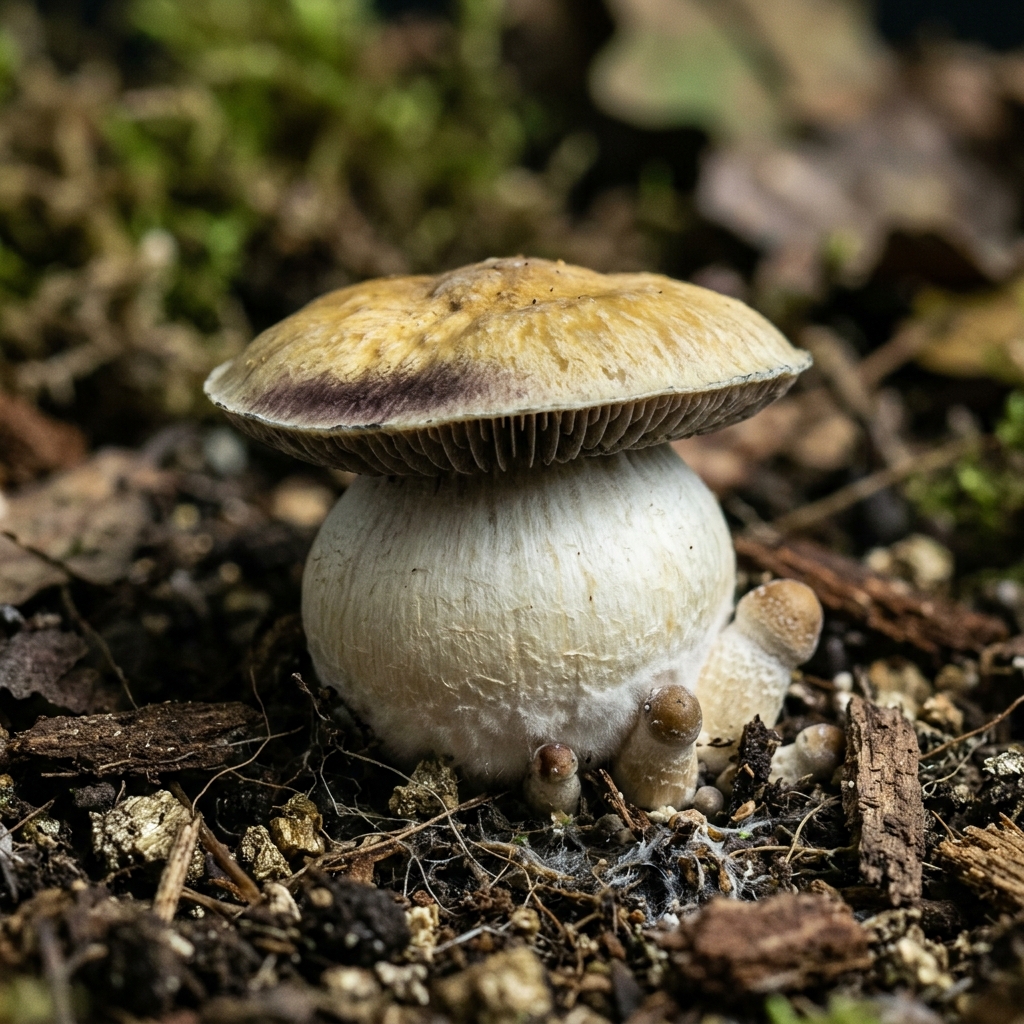
Morphology and Mutations
Cap (Pileus): Extremely wide and flattened, often in the shape of a flying saucer (squat).
Stipe (Stem): Short, obese, and bulbous, giving the entire sporocarp a "plug" or "button" appearance.
Spores: Highly sporulating, depositing an intense black powder.
Genetic Traits: Stipital dwarfism, Pileus hypertrophy, High spore load
Cultivation Characteristics
Special Requirements: The squat phenotype often requires high light conditions to be triggered, although it is genetically dominant in pure KSSS isolates.
Effects and Psychopharmacology
- Mood enhancement
- Augmented tactile perception
- Warm colors
History and Description
The Koh Samui Super Strain (KSSS) is an enigmatic phenotype derived from wild Asian genetics isolated by John Allen (Mushroom John). While the classic Koh Samui strain produces tall specimens, the lineage marketed as KSSS has been stabilized (either accidentally or intentionally) into a "squat" phenotype. These specimens exhibit inhibited stipe elongation alongside massive diametral <span data-tooltip="The cap or top part of the mushroom" tabindex="0">pileus</span> expansion, resulting in mushrooms that visually resemble small pumpkins or saucers. Its mycelial aggressiveness, typical of endemic Southeast Asian strains, makes it a dominant pathogen against contaminations.
The Koh Samui Super Strain (KSSS - Squat Mutation) variety has an extensive history in modern mycology, being appreciated for its unique genetic profile and its contribution to fungal biodiversity studied in laboratories worldwide.