Koh Samui (Classic)
Isla Koh Samui, Tailandia (Ban Taling Ngam)
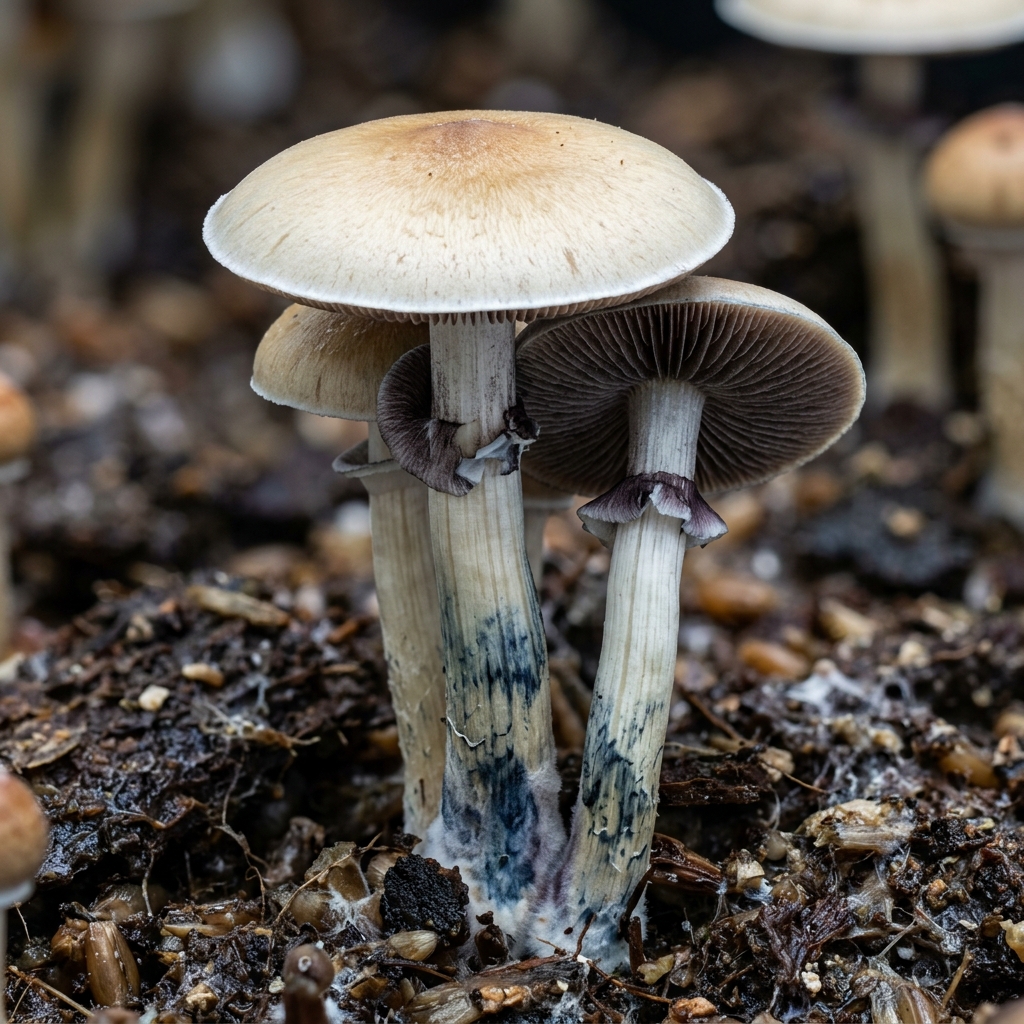
Morphology and Mutations
Cap (Pileus): Toasted brown to whitish, flat with margins sometimes fissured at maturity.
Stipe (Stem): Slender, fibrous, strongly bluish to the touch.
Spores: Dark purplish, abundant production.
Genetic Traits: Thermotropic resistance, Robust <span data-tooltip="Fertile part of the fungus where spores are produced (e.g. gills)" tabindex="0">hymenium</span>
Cultivation Characteristics
Special Requirements: Thermophilic isolate; its optimal performance is observed at fruiting temperatures slightly higher than those of Mesoamerican strains (25°C - 27°C).
Effects and Psychopharmacology
- Vivid fractals
- Profound euphoria
- Significant sensory alteration
History and Description
Collected in the early 1990s in the village of Ban Taling Ngam, on the Thai island of Koh Samui, this classic strain was introduced to the West thanks to John W. Allen's extensive ethnomycological field travels. Unlike its hypertrophic derivative (KSSS), the traditional Koh Samui lineage exhibits standard basidiocarpal architecture, with graceful stipes and normal proportions. Endemic to humid tropical ecosystems, it has developed remarkable thermal resistance, making it extremely resilient in home incubators. Biochemically, Southeast Asian strains often report subtle variations in the psilocybin/baeocystin ratio, providing a high-potency alkaloid profile.
The Koh Samui (Classic) variety has a long history in modern mycology, being appreciated for its unique genetic profile and its contribution to fungal biodiversity studied in laboratories worldwide.