Gourmet Gastronomy & ElixirsProtocol #32 of 36
Crispy Umami Caramelizationtimer 10 minEasy
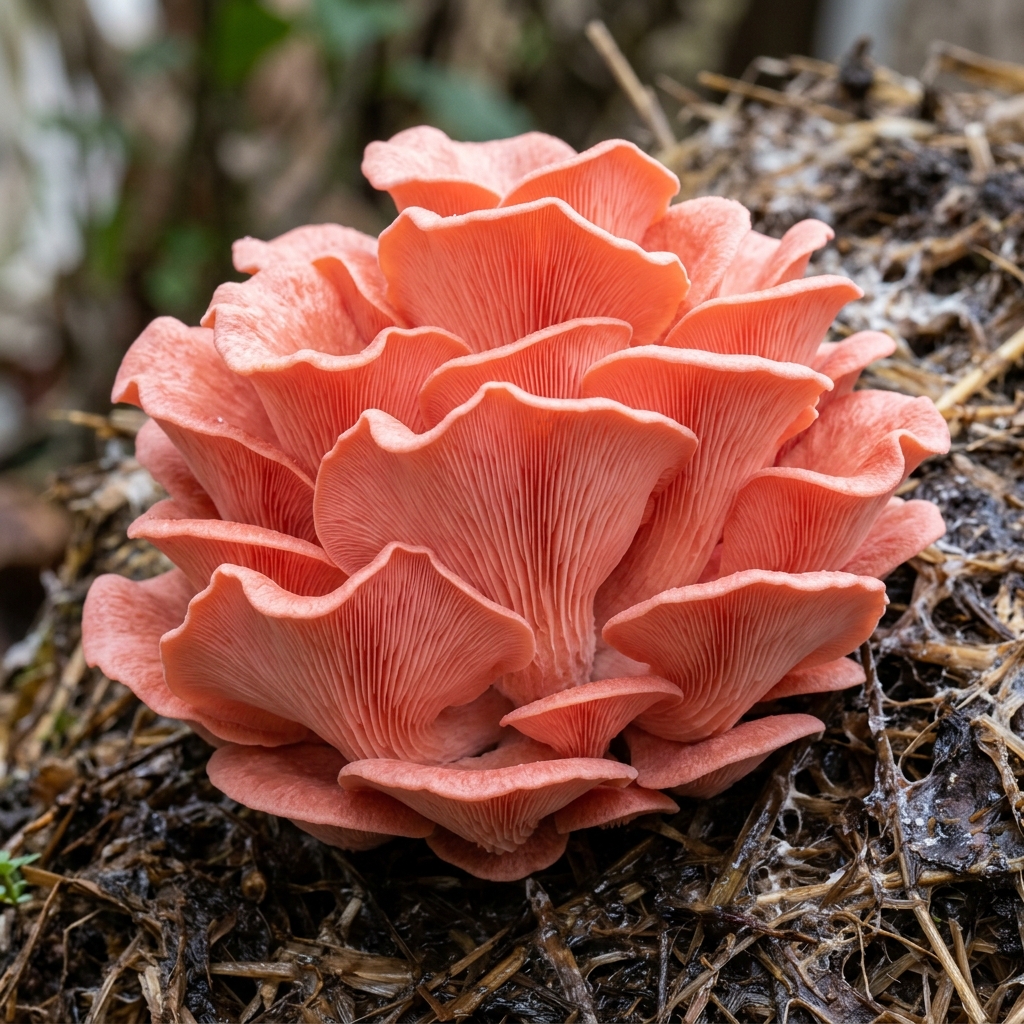
32. Crispy Pink Oyster 'Mushroom Bacon' with Smoked Paprika & Tamari
Transforming the dense, meaty flesh of tropical Pleurotus djamor into smoky, shatteringly crisp bacon-style strips glazed with tamari and smoked Spanish paprika.
inventory_2Ingredients & Ratios
- check_circleFresh Pink Oyster mushrooms (Pleurotus djamor): 250 g hand-torn along the gill grain into strips.
- check_circleExtra virgin olive oil: 2 tbsp.
- check_circleSmoked Spanish paprika (Pimentón de la Vera): 1/2 tsp.
- check_circleSoy sauce or Tamari: 1 tsp.
- check_circleSmoked flaky sea salt & cracked black pepper: To taste.
format_list_numberedStep-by-Step Procedure
- 1Hand-tearing: Tear Pink Oyster caps along their natural hyphal grain into uniform strips.
- 2Single-layer crisp sear: Spread strips in a wide skillet with olive oil over medium-high heat without crowding. Sear undisturbed for 3-4 minutes until edges curl and turn deeply crisp.
- 3Smoky glaze: Flip strips, drizzle with soy sauce and smoked paprika, and toss for 1 minute to caramelize without scorching the paprika.
- 4Crisp rest: Drain briefly on paper towels so the glaze sets crisp, then finish with smoked flaky salt.
Biochemical Rationale & Chef's Golden Key
How this culinary protocol maximizes bioavailability and eliminates gastric distress.
Science & Chef's Key: Tropical Pleurotus djamor has exceptionally dense, low-moisture flesh rich in savory amino acids. Rendering out its moisture in a single layer and glazing with tamari and smoked paprika creates a savory crispness remarkably close to cured bacon.
psychiatry
View Species Guidearrow_forwardWant to cultivate or explore Pleurotus djamor (Seta Ostra Rosa)?
Discover full taxonomy, incubation parameters, substrate recipes and therapeutic pharmacological data in MycoVerso's encyclopedia.