Pleurotus citrinopileatus
Singer
Common Names
Description
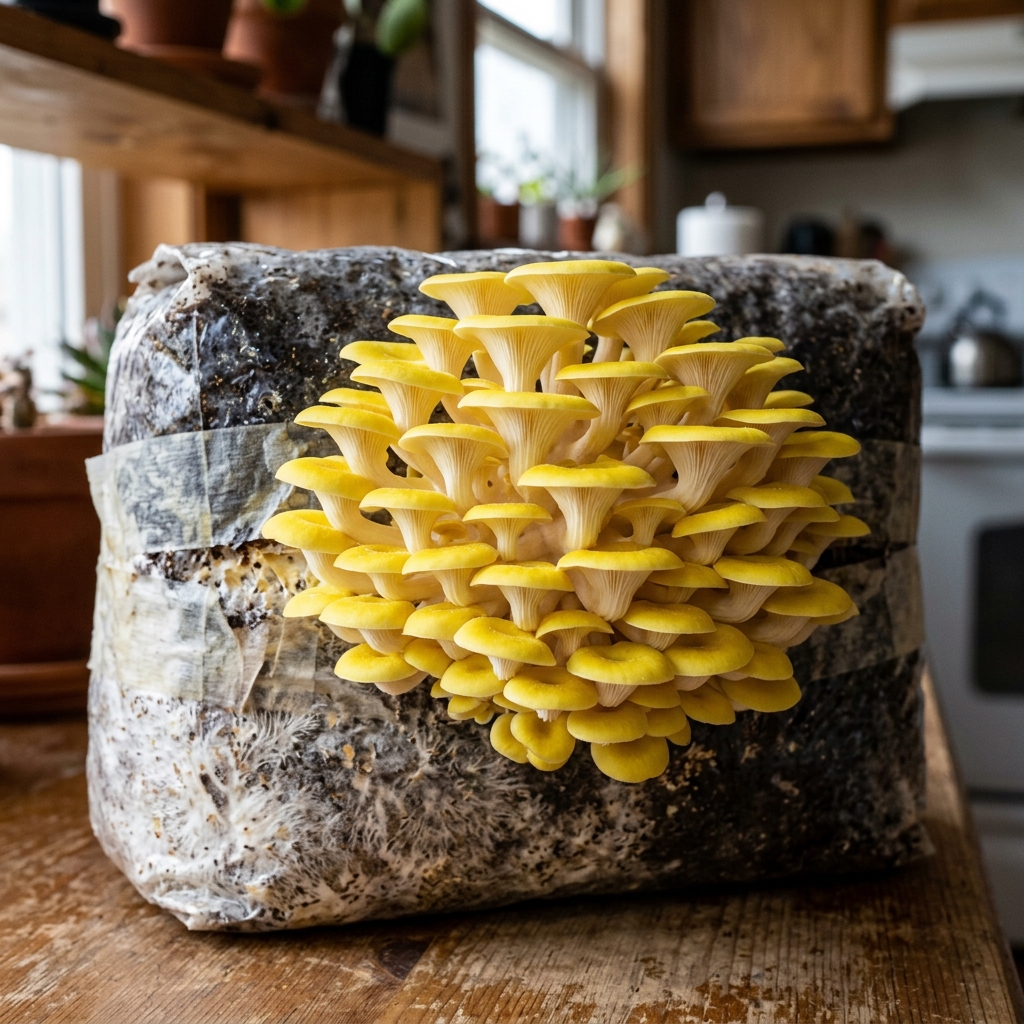
The Golden Oyster or Yellow Oyster mushroom (Tamogitake in Japan). Forms breathtakingly dense bouquets of vibrant lemon-yellow trumpet-like caps with pure white stems and gills. Delivers a distinct aromatic profile of toasted cashew nuts when cooked.
Ecology & Fungal Role
White-rot wood decay saprotroph with rapid colonization characteristics.
circle Cap (Pileus)
line_weight Hymenium
more_vert Stem (Stipe)
grain Spores
restaurant Flesh & Texture
warning Wild Foraging Safety: Potential Toxic Lookalikes
Terrestrial mycorrhizal mushroom growing from forest soil, with blunt ridge-like folds (not true gills) and apricot aroma.
Cultivation Biology & Master Overview
The Golden or Yellow Oyster is a visual and gastronomic jewel that forms bright lemon yellow floral bouquets. It grows optimally in warm ranges (20-26°C) and when cooked it develops an exquisite flavor of nuts and cashews.
Step-by-Step Cultivation Manual (Inoculation to Harvest)
The full phase-by-phase chronological protocol (grain colonization, bulk mixing, fruiting induction, harvesting and flushes) and expert grower secrets are available in the Master Cultivation Guide.
restaurant_menu Flavor Profile
Rich nutty cashew notes, delicate sweet floral aroma, and silky umami.
skillet Recommended Cooking Methods
- Sautéed in butter with sea salt until edges turn golden and crisp
- Folded into creamy risotto, egg scrambles, or quiches
wine_bar Gourmet Pairings
- Butter, shallots, sage, tarragon, toasted pine nuts, dry white wine
kitchen Storage & Preservation
Fragile; best consumed fresh within 4-5 days.